

What Is The Principle Of Rocker Switch?
Mar 13, 2024
The principle of a rocker switch is relatively simple yet highly effective, providing a convenient means of controlling electrical circuits. At its core, a rocker switch operates based on the principles of mechanical and electrical engineering, utilizing a mechanism that translates physical movement into electrical action. Here's a detailed explanation of the principle behind a rocker switch:
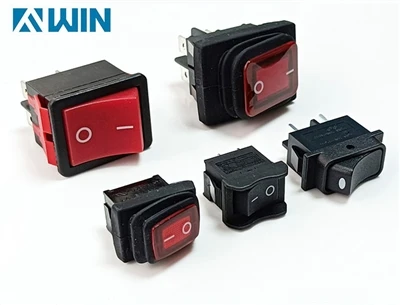
1. Mechanical Design:
Paddle or Lever: A rocker switch typically consists of a paddle or lever that extends from the switch housing. This paddle serves as the actuator that users press or toggle to open or close the electrical circuit.
Pivot Point: The paddle is mounted on a pivot point or fulcrum within the switch housing, allowing it to rock back and forth when pressed.
Spring Mechanism: Inside the switch housing, a spring mechanism provides tension and resistance, ensuring that the paddle returns to its original position after being actuated.
2. Electrical Contacts:
Contacts: The internal mechanism of the rocker switch includes stationary and movable electrical contacts. These contacts are typically made of conductive materials such as copper or silver.
Terminal Connections: The stationary contacts are connected to the switch terminals, while the movable contacts are attached to the paddle or lever.
Open and Closed Positions: In the default or "off" position, the movable contacts are separated from the stationary contacts, creating an open circuit. When the switch is actuated, the paddle moves to bring the contacts into physical contact, closing the circuit.
3. Actuation:
Toggle Action: The user applies force to one side of the paddle, causing it to pivot around the fulcrum point. This action toggles the switch between the "on" and "off" positions.
Visual and Tactile Feedback: As the paddle moves, users typically experience tactile feedback in the form of resistance or a click, indicating that the switch has been actuated. Some switches may also feature visual indicators such as LED illumination to confirm the switch status.
4. Electrical Circuit:
Closing the Circuit: When the paddle is pressed to the "on" position, the movable contacts come into contact with the stationary contacts, completing the electrical circuit.
Current Flow: With the circuit closed, electrical current can flow through the switch, allowing power to be transmitted to connected devices or components.
Opening the Circuit: Releasing the paddle returns it to the "off" position, breaking the electrical connection between the contacts and opening the circuit.
5. Applications:
Versatile Control: Rocker switches are used in a wide range of applications where simple on/off or momentary control is required, including lighting systems, appliances, automotive accessories, industrial machinery, and more.
User Interface: Their ergonomic design and intuitive operation make rocker switches ideal for user interface controls in various devices and systems.
Reliability: With their robust construction and simple mechanism, rocker switches offer reliable performance and durability in demanding environments.
Conclusion:
The principle of a rocker switch relies on the translation of mechanical movement into electrical action, providing users with a convenient and intuitive means of controlling electrical circuits. By combining simple yet effective mechanical design with reliable electrical contacts, rocker switches offer versatile control solutions for a wide range of applications across industries.


