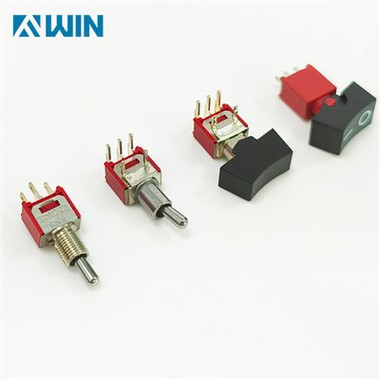
The development trend of the metal push button switch.
Feb 26, 2025
The metal push button switch is a widely used component across various industries due to its durability, tactile feedback, and aesthetic appeal. Over the years, it has undergone significant advancements to keep pace with evolving technological needs, user preferences, and manufacturing processes. In this article, we will explore the development trends of metal push button switches, including their evolution, application expansion, material innovation, and future directions.

1. Advancements in Durability and Reliability
Historically, push button switches have been employed in situations where durability and reliability are paramount. With the introduction of metal as a primary material, these switches became inherently more robust and resistant to wear and tear compared to traditional plastic counterparts. The evolution of manufacturing techniques, such as precision machining and the use of specialized coatings, has allowed metal push button switches to withstand extreme conditions like high temperatures, humidity, corrosion, and physical impact.
Manufacturers have also increasingly focused on ensuring that metal push button switches maintain high reliability in critical environments. For example, the aerospace, automotive, and military industries demand components that perform flawlessly under demanding conditions. This has spurred the development of switches that are not only durable but also have longer lifespans, reducing the need for frequent replacements and maintenance.
2. Tactile Feedback and Aesthetic Appeal
The tactile feedback offered by metal push button switches has been a significant selling point. Users appreciate the physical response they get when pressing a button, which provides a sense of confidence and control. In the past, tactile feedback was primarily designed for functionality. However, with the growth of consumer electronics and industrial design, there has been a greater focus on integrating visual and tactile feedback into a unified user experience.
The aesthetic appeal of metal push button switches has also evolved. Modern designs often incorporate sleek, minimalist features that complement the overall design of electronic devices. Switches are available in a variety of finishes, including brushed, anodized, and polished metals, which add an upscale feel to consumer products. Additionally, customizable options for size, shape, and color allow manufacturers to align the switch design with branding requirements, further enhancing the user experience.
3. Miniaturization and Integration with Electronics
One of the most prominent development trends in metal push button switches has been the ongoing miniaturization of the components. As the demand for smaller, more compact devices grows, so does the need for smaller switches that fit seamlessly into modern electronics. The push for miniaturization has driven the development of increasingly smaller metal push button switches that retain their durability and functionality while fitting into devices with limited space.
Along with miniaturization, there has been a trend toward integrating these switches with other electronic components, making them smarter and more versatile. For example, some modern switches are being integrated with LEDs or capacitive touch sensors to provide both visual and functional feedback. These integrated switches can be used for controlling not only basic functions but also for more advanced features, such as adjusting brightness, controlling volume, or activating certain device modes.
4. Smart Features and IoT Integration
As part of the broader trend toward smart technology and the Internet of Things (IoT), metal push button switches are increasingly being designed to support intelligent, networked devices. In IoT applications, push button switches can act as gateways to interact with cloud services, control other connected devices, and enable various smart functionalities. For example, in smart home systems, a metal push button switch could control lights, thermostats, and security systems, all while being integrated into a home automation network.
The rise of IoT-driven products has made it necessary for push button switches to handle not only traditional on/off functions but also more complex interactions, such as triggering specific commands, pairing devices, or providing immediate feedback to users. This integration of smart technology has led to the creation of switches that are capable of transmitting data, enabling users to control devices through wireless signals or even through voice recognition.
5. Sustainability and Eco-friendly Materials
As with many other industries, there is an increasing emphasis on sustainability in the production of metal push button switches. Many manufacturers are exploring eco-friendly materials that reduce environmental impact. This includes the use of recycled metals, such as aluminum, or adopting more sustainable manufacturing processes to minimize energy consumption and waste.
Moreover, some manufacturers are developing switches that feature biodegradable or recyclable components, further improving the environmental footprint of the end products. This trend is becoming more prominent as the demand for environmentally responsible products continues to grow, and consumers become more aware of the impact of their purchasing decisions.
6. Customization and User-Centric Design
Customization has become a significant trend in the design and development of metal push button switches. Manufacturers are now offering a wide range of options to tailor switches to specific applications or consumer preferences. These options include customizable actuation forces, colors, sizes, shapes, and even the tactile feel of the switch.
For industries like automotive, consumer electronics, and medical devices, customization ensures that the switch not only serves its functional role but also aligns with brand aesthetics, user ergonomics, and specific operational needs. With the shift toward personalization, the demand for customizable metal push button switches continues to grow, as customers look for products that suit their individual preferences and technical requirements.
7. Wireless and Touch-Based Technology
Advancements in wireless communication and capacitive touch technology have also influenced the development of metal push button switches. While traditional mechanical switches remain popular, capacitive touch-based switches are increasingly gaining traction due to their sleek, minimalistic design and high reliability. These touch-sensitive switches offer the same level of user interaction but without the mechanical wear associated with physical buttons.
Wireless switches, which can control devices over Bluetooth or Wi-Fi, are also becoming more common. These innovations are paving the way for the creation of switches that do not require direct physical contact with the device, providing more versatility in their placement and function.
8. Emerging Applications and Industries
While metal push button switches are widely used in consumer electronics, automotive, and industrial applications, they are also finding new uses in emerging industries. The growing demand for wearables, medical devices, and autonomous systems is opening new frontiers for metal push button switches. For instance, in medical devices, these switches need to be both compact and durable, capable of withstanding constant use in high-hygiene environments.
Additionally, the development of augmented reality (AR) and virtual reality (VR) systems has created new possibilities for switches that work seamlessly in immersive environments. Metal push button switches in such applications might incorporate haptic feedback and other sensory features to provide users with an intuitive and engaging experience.
Conclusion
The development trends in metal push button switches highlight the ongoing advancements in durability, functionality, miniaturization, and user-centric design. As industries continue to demand higher performance, greater customization, and integration with smart technologies, metal push button switches are adapting to meet these needs. The convergence of aesthetics, sustainability, and technological innovation promises to further elevate the role of these components in a wide array of applications, from everyday consumer products to critical industrial and medical devices. As technology evolves, so too will the metal push button switch, maintaining its position as a crucial element in modern electronics and devices.